

A Practical Guide for New Zealand OEMs
For OEMs operating in New Zealand, selecting the right off-highway diesel engine solution is one of the most consequential decisions in any product’s lifecycle. Choose well and your machine builds a reputation for dependability. Choose poorly and you’re managing warranty claims, frustrated operators, and costly redesigns that should never have been necessary.
The complexity is that ‘off-highway diesel engine’ encompasses an exceptionally wide range of applications, operating environments, duty cycles, and power requirements, from compact agricultural machinery running in the Bay of Plenty to heavy mining equipment in the South Island’s West Coast.
So how do you determine which off-highway diesel engine is right for your specific requirements?
Four Questions Every NZ OEM Should Ask Before Selecting an Off-Highway Diesel Engine Solution
Before reviewing a single spec sheet, be clear on these fundamentals:
- What is the duty cycle? Continuous, intermittent, or variable load? This determines whether you require a prime power-rated engine or an intermittent duty unit.
- What environment will this machine operate in? New Zealand’s conditions range from the humidity and salt air of coastal regions to alpine cold, geothermal dust, and volcanic terrain — all of which affect engine selection.
- What emissions standard applies? New Zealand off-highway diesel engines are subject to relevant nonroad emission standards, and certain export markets or specialist environments such as ports and airports may require Stage V or Tier 4 Final compliance.
- What does the service landscape look like? An engine that cannot be adequately serviced within a reasonable distance of where it operates is a liability. In remote New Zealand locations, this consideration is especially important.
With those answers in hand, here is how requirements vary across the primary application sectors.
Mining and quarrying: high power, sustained hours, zero tolerance for failure
New Zealand’s mining and quarrying sector — including coal extraction on the West Coast, gold operations in Otago, and aggregate quarrying across both islands — demands engines built for extended shifts under sustained load. Equipment frequently runs in dusty, remote conditions with limited access to service infrastructure.
What this means for off-highway diesel engine solution selection:
- High continuous duty ratings are essential — not just rated on paper, but proven under sustained 80–100% load conditions across extended shifts.
- Engines in the 300 kW and above range are common for haul trucks, drilling rigs, and large loaders in quarrying applications.
- Robust air filtration is non-negotiable. Fine particulate from mining and quarrying will damage an inadequately filtered engine well before its expected service life.
- Parts availability and field service support must be realistic for the location — remote West Coast sites cannot sustain indefinite reliance on flown-in technicians.
Construction: variable load, compact packaging, high torque
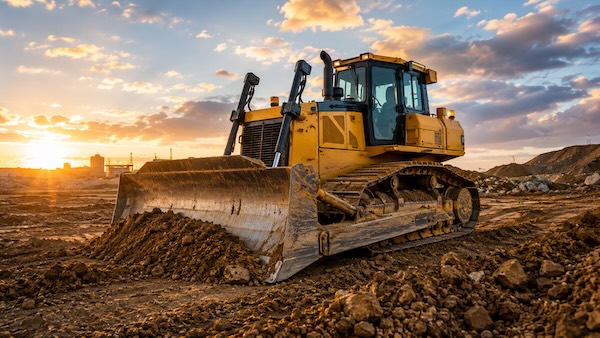
New Zealand’s infrastructure pipeline, roading, housing, commercial development, and earthquake rebuild, keeps construction equipment running hard. From compact excavators and skid-steers through to large graders, bulldozers, and concrete pump trucks, the demands vary but share common threads.
What this means for engine selection:
- Variable load profiles are standard. A backhoe loader may idle for extended periods then spike to full load rapidly so the engine needs strong transient response.
- Packaging constraints are real. Construction equipment is often tightly packaged, and engine envelope dimensions and mounting flexibility matter to OEMs.
- Cold start reliability is critical in the South Island, elevated central North Island sites, and during winter construction on major infrastructure projects.
- Standardising on a Tier 4-compliant modular engine platform early in the design process avoids re-engineering downstream.
Agriculture and horticulture: seasonal intensity, fuel efficiency, field serviceability
New Zealand agriculture is diverse. Sheep and beef farming, dairy, horticulture, and viticulture all place different demands on machinery as tractors, harvesters, orchard platforms, and sprayer units each have distinct requirements, but one constant unites them: the pressure of seasonal peaks.
What this means for engine selection:
- Reliability during harvest and planting windows is critical. Equipment failure during a narrow harvest period in Hawke’s Bay or Marlborough has significant financial consequences.
- Fuel efficiency carries real weight over a full season. Even a 5% improvement in fuel economy compounds meaningfully across hundreds of operating hours.
- Field serviceability is essential. Operators in the Waikato, Canterbury Plains, or Southland need engines serviceable with standard tooling and parts that don’t require lengthy lead times from offshore.
Forestry: extreme duty cycles, remote terrain, thermal management
New Zealand’s forestry industry runs harvesters, forwarders, woodchippers, and skidders through some of the most demanding duty cycles of any off-highway equipment. Steep terrain, debris-heavy environments, and operations far from service centres define the challenge.
What this means for engine selection:
- High torque output across a wide RPM band is essential. A harvester head is processing timber while simultaneously managing hydraulics and machine movement meaning the engine is effectively running multiple systems at once.
- Advanced cooling systems are critical. Slow-moving forestry equipment cannot rely on ram air cooling, so radiator sizing and fan configuration must compensate.
- Robust air filtration for sawdust, bark, and fine debris is fundamental to protecting pistons and cylinder walls.
- Long service intervals reduce the burden of maintaining machines in remote Northland, East Coast, or West Coast forestry blocks.
Material handling: duty cycle intensity in ports and logistics hubs
Forklifts, reach stackers, terminal tractors, and container handlers are central to New Zealand’s port operations at Auckland, Tauranga, Lyttelton, and Port Chalmers. This segment is easy to underestimate but consistently demanding on powertrains.
What this means for engine selection:
- Continuous short-cycle operation. A reach stacker or container handler may complete hundreds of lift cycles per shift with constant load fluctuations.
- Low-emission requirements are increasingly enforced in enclosed or semi-enclosed port environments, independent of national regulations.
- Compact engine packaging is a genuine constraint for forklifts, where dimensions and cooling configuration must fit within tight chassis envelopes.
Marine and workboat: corrosion resistance, continuous output, regulatory compliance
New Zealand’s extensive coastline supports a substantial commercial marine industry — fishing vessels, charter boats, survey craft, tugs, and harbour ferries. Marine applications carry demands that land-based machinery simply does not face.
What this means for engine selection:
- Saltwater corrosion is an immediate and ongoing concern. Marine-rated engines require appropriate material specifications and protective treatments throughout.
- Continuous duty ratings matter. A commercial fishing vessel operating offshore cannot rest its engine as it needs to sustain output for hours at a time.
- Regulatory compliance extends beyond New Zealand standards to MARPOL emissions requirements in relevant operating zones.
- Vibration isolation and acoustic management are more significant in marine applications than in most land-based equipment.
Rail and track maintenance: reliability across isolated corridors
Diesel-powered rail maintenance equipment including track tampers, ballast regulators and hi-rail vehicles, operate across some of New Zealand’s most remote rail corridors, including the Main South Line, the Midland Line through the Southern Alps, and the Palmerston North to Gisborne line.
What this means for engine selection:
- Extended service intervals are critical when machinery is working hundreds of kilometres from the nearest service facility.
- Reliable cold and hot weather starting is essential across New Zealand’s climate range, from alpine conditions to humid Northland summers.
- Off-highway diesel engine solutions must be adaptable to hi-rail configurations, which impose specific vibration profiles and mounting requirements.
How DEUTZ Addresses These Requirements Across New Zealand Applications
DEUTZ has been engineering off-highway diesel engines for over 160 years, and that depth of application experience is reflected in the range available to New Zealand OEMs. DEUTZ New Zealand offers two complementary off-highway engine families:
- DEUTZ’s own off-highway diesel engine solution range, covering capacities from compact single-cylinder units to multi-cylinder configurations producing up to 620 kW — covering the bulk of industrial, agricultural, and construction applications.
- Selected OM series Daimler off-highway diesel engine solution range for agriculture and construction, supported by DEUTZ from January 2025, covering displacements from 5 to 16 litres with maximum outputs up to 480 kW.
The OM series range includes:
- TCD 5.1 L4 (OM934): 4-cylinder, compact and efficient — well suited to mid-sized construction and agricultural equipment
- TCD 7.7 L6 (OM936): 6-cylinder, versatile performance for agriculture and construction applications
- TCD 10.7 L6 (OM470): Durable heavy-duty power for large earthmoving machinery
- TCD 12.8 L6 (OM471): High-output 6-cylinder for demanding industrial applications
- TCD 15.6 L6 (OM473): Maximum power and torque for mining, drilling, and generator set applications
This breadth means New Zealand OEMs can work with a single industrial diesel engine supplier across multiple machine platforms, simplifying parts procurement, service relationships, and technical support.
A Practical Checklist for NZ OEMs: Getting Off-Highway Diesel Engine Solution Selection Right
- Duty cycle confirmed? Is it continuous, prime, or standby rated? And is there evidence the engine has been tested and rated for your specific application profile, not only under ideal conditions?
- Are your emissions compliance locked in? Including both New Zealand requirements and any export markets the machine will enter.
- Have you assessed the service network? Who services this engine in the regions where your customers operate? Are parts held locally or sourced from offshore with extended lead times?
- Is installation support available? Does the engine supplier offer genuine OEM integration support including engineering assistance for mounting, cooling circuit design, and electronic integration, not just a spec sheet?
- Is the long-term parts supply confirmed? An engine discontinued in five years with no clear aftermarket pathway creates downstream liability for OEMs and their customers.
Talk to DEUTZ New Zealand About Your Off-Highway Diesel Engine Solution
DEUTZ New Zealand’s technical team works directly with OEMs and equipment manufacturers on engine selection and integration. Whether you are developing a new machine platform or re-powering an existing product line, the team can work through your application requirements and match them to the right engine from the DEUTZ or Daimler off-highway OM range.
DEUTZ engines are trusted by a wide range of New Zealand and international equipment manufacturers.
To explore the current partner network, visit: deutz.com/partners
To discuss your off-highway diesel engine application, contact DEUTZ New Zealand.