


The Future of Forestry Equipment in New Zealand
New Zealand’s forestry sector is evolving rapidly, driven by strong export demand, plantation expansion, and increasing pressure to operate sustainably. With forestry playing a major role in the national economy, contractors and equipment manufacturers are investing in advanced machinery that delivers reliability, efficiency, and lower environmental impact.
Modern forestry equipment must perform consistently in remote, rugged locations while meeting stricter emissions expectations. That is why selecting the right forestry diesel engine is more important than ever.
Unique Demands of Forestry Machinery in New Zealand
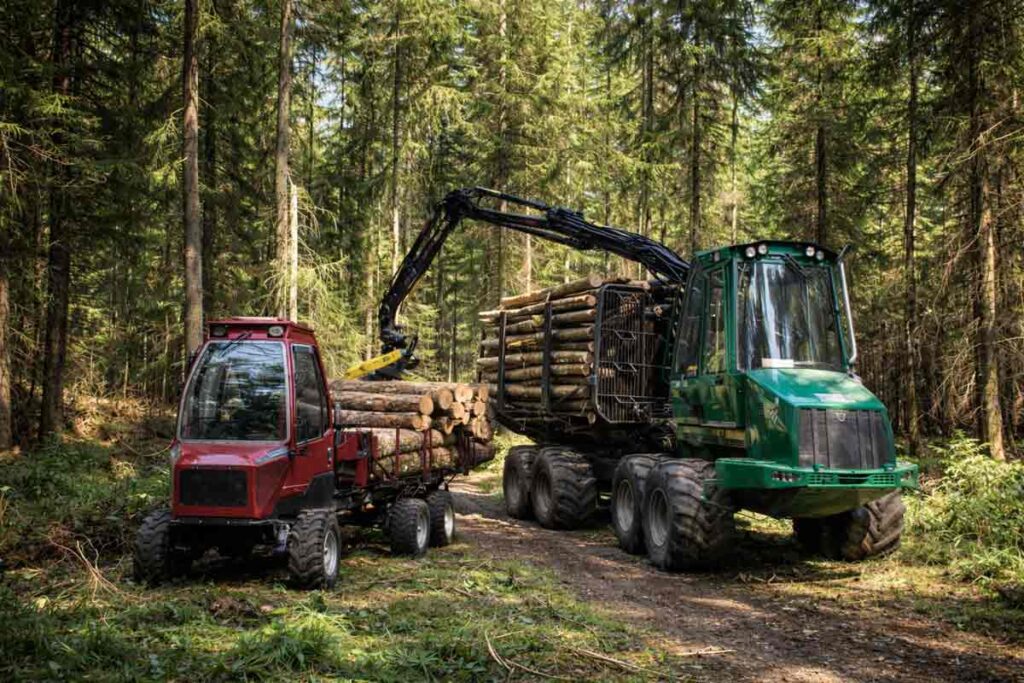
Forestry operations across regions like Rotorua, Gisborne, and Southland present challenging working conditions. Equipment such as harvesters, forwarders, skidders, and woodchippers must handle:
- Continuous heavy workloads
- Steep and uneven terrain
- High levels of dust, bark, and debris
- Long operating hours, often exceeding 10 hours per day
Engines used in these applications must be purpose-built heavy duty off-highway solutions. High torque, strong load response, and durable internal components are essential for maintaining productivity in demanding environments.
Emissions Standards and Stage V Technology
New Zealand aligns closely with global emissions trends, particularly European standards. Many modern forestry machines are now equipped with EU Stage V (Stage 5) diesel engines to reduce environmental impact.
These engines significantly lower nitrogen oxide (NOx) and particulate matter through technologies such as:
- High-pressure common rail fuel injection
- Selective catalytic reduction (SCR)
- Diesel particulate filters (DPF)
According to the United Nations Food and Agriculture Organization (FAO), cleaner engine technologies are becoming critical for sustainable forestry practices worldwide.
For New Zealand equipment manufacturers exporting machinery overseas, adopting Stage V compliant engines simplifies regulatory requirements and future-proofs their products.
Power and Torque for Multi-Function Forestry Equipment
Forestry machinery rarely performs a single task. A harvester, for example, may simultaneously cut, delimb, and process timber while operating hydraulic systems.
This creates a need for diesel engines that deliver:
- Strong torque across a wide RPM range
- Stable hydraulic power output
- Efficient fuel consumption under varying loads
A well-matched engine ensures smooth operation without excessive fuel burn, which is crucial for cost control in large-scale forestry operations.
Example: Forestry operations in the Central North Island
Consider a hypothetical contractor operating near Rotorua, managing plantation pine harvesting.
Their machines run up to 12 hours daily, processing high volumes of timber on rolling terrain. To maintain efficiency, the equipment is fitted with a 210 kW heavy duty off-highway engine featuring:
- High torque output for consistent cutting performance
- Advanced cooling systems for long operating hours
- Heavy-duty filtration to handle dusty conditions
With the correct engine specification, the contractor reduces downtime, improves fuel efficiency, and maintains steady production across the season.
Reliability in Remote Forestry Locations
Much of New Zealand’s forestry activity takes place far from major service centres. This makes engine reliability a top priority.
Operators require engines that offer:
- Extended service intervals
- Fuel efficiency to reduce refuelling logistics
- Robust air and fuel filtration systems
- Reliable starting in both cold South Island winters and warmer North Island climates
Engines designed specifically for off-highway applications are built to handle these conditions, ensuring minimal disruption in remote sites.
Preparing for Forestry in 2026
Looking ahead, New Zealand forestry operators will continue balancing productivity with sustainability. The shift towards Stage V diesel engines supports this transition by reducing emissions without compromising performance.
Combined with improved electronic engine management systems and better fuel efficiency, modern engines are helping to future-proof forestry operations across the country.
Choosing the Right Engine Partner
Selecting the right engine supplier is a key decision for both equipment manufacturers and contractors.
In New Zealand, manufacturers such as Hansa Products and Mahoe Sawmills have long-standing relationships with DEUTZ, utilising proven engine platforms like the DEUTZ 2011 series in their woodchippers.
These partnerships highlight the importance of reliability, local support, and application-specific engineering in forestry equipment.
Forestry Diesel Engines and DEUTZ New Zealand
A dependable heavy duty off-highway engine ensures forestry machinery can perform in New Zealand’s toughest environments.
To explore suitable solutions, visit: https://www.deutz.com/en/products/engines/
Or connect with your local DEUTZ New Zealand dealer for tailored advice.