


Choosing the Right Generator for NZ Conditions
Whether you’re overseeing a civil project in Canterbury, running a dairy operation in Southland, or maintaining a commercial site in Auckland, selecting between a standby-rated and prime-rated DEUTZ genset directly affects operational reliability and long-term cost.
New Zealand’s mix of remote rural regions, variable weather, and a grid that can be less stable outside urban centres means correct genset selection is essential for business continuity.
Understand the Difference: Standby Vs Prime
Standby power genset (ESP – emergency standby power)
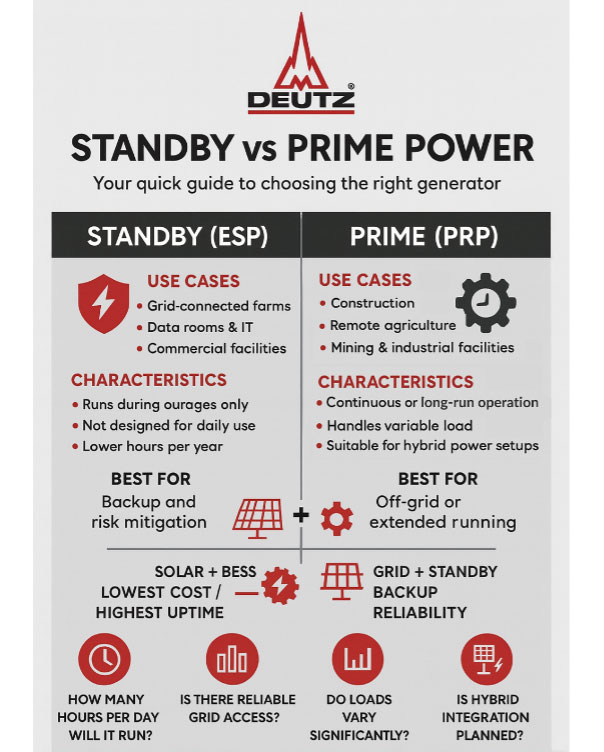
A standby-rated genset is designed for short, infrequent use, mostly during grid outages. In NZ this often means:
• Stepping in during storms, planned outages or line faults
• Handling variable loads, but not intended for continuous runtime
• Best for operations connected to the grid that simply need reliable backup
Prime power genset (PRP – prime rated power)
Prime-rated gensets are built for continuous or extended operation. They are suited to NZ industries that operate in remote regions or require long daily runtimes.
A prime-rated genset:
• Can run for unlimited hours under varying loads
• Works well where grid access is limited, such as remote accommodation camps or isolated farms
• Integrates effectively with hybrid systems such as solar and Battery Energy Storage Systems (BESS)
How to Choose the Right DEUTZ Genset in New Zealand
1. Agriculture and agribusiness
New Zealand’s dairy, sheep and horticulture sectors depend heavily on consistent electricity for milking sheds, wash-down systems, cool stores and irrigation.
Standby genset:
Ideal for grid-connected farms in Waikato or Taranaki that need reliable emergency backup during outages, particularly during peak milking seasons.
Prime genset:
Best for remote stations on the West Coast or high-country farms in Otago where daily loads are significant and weather-related outages are more frequent.
Example scenario:
A Southland dairy farm experiences voltage fluctuation during winter due to grid strain. A prime-rated DEUTZ genset paired with a mid-size BESS keeps the rotary shed running smoothly while reducing diesel use.
2. Construction and civil works
New Zealand construction sites often operate before grid connection is established.
Standby genset:
Useful on commercial builds in cities where grid access exists but backup is required for critical equipment.
Prime genset:
Usually the best fit for roading projects, wind farm builds or remote infrastructure upgrades where generators run compressors, pumps, site offices and lighting for long periods.
3. Manufacturing and industrial facilities
Industrial operations across NZ rely on stable, high-quality power.
Standby genset:
Common for factories in Hamilton, Christchurch or Wellington where grid reliability is strong but the cost of downtime is high.
Prime genset:
Ideal for sawmills, quarries or processing plants in remote areas where power demand is continuous.
4. Commercial facilities and data rooms
Sectors including healthcare, logistics, supermarkets and IT require guaranteed uptime.
Standby genset:
Often the default choice for hospitals, aged-care facilities and data rooms across NZ.
Prime genset:
Used when operations are located outside dense grid networks, such as remote telecom sites.
Key Considerations when Selecting Your DEUTZ Genset
• Load profile: Record min, average and peak loads to avoid under- or oversizing.
• Operating hours: More than 8 hours runtime per day typically means a prime application.
• Fuel efficiency: DEUTZ engines offer strong efficiency and long service intervals.
• Hybrid integration: Prime-rated gensets pair well with solar and BESS for reduced diesel use.
Power Your NZ Operation With Confidence
Understanding your environment, energy demands and infrastructure helps ensure the right DEUTZ genset is selected for long-term reliability.
For tailored advice in New Zealand, contact your local DEUTZ dealer.