

The New Zealand mining industry, like many around the world, faces growing pressure to reduce its environmental impact while maintaining reliable production. A key area of focus is the type of engines powering heavy machinery, haul trucks, and on-site generators.
What Is the Difference Between Diesel, Natural Gas, and Hydrogen Engines in New Zealand Mining?
As a trusted global engine manufacturer, DEUTZ provides solutions that enable mining operators to balance dependability with sustainability. Understanding the differences between diesel, natural gas, and hydrogen engines is critical for operations in New Zealand’s challenging and often remote environments.
Diesel engines in mining engine technology
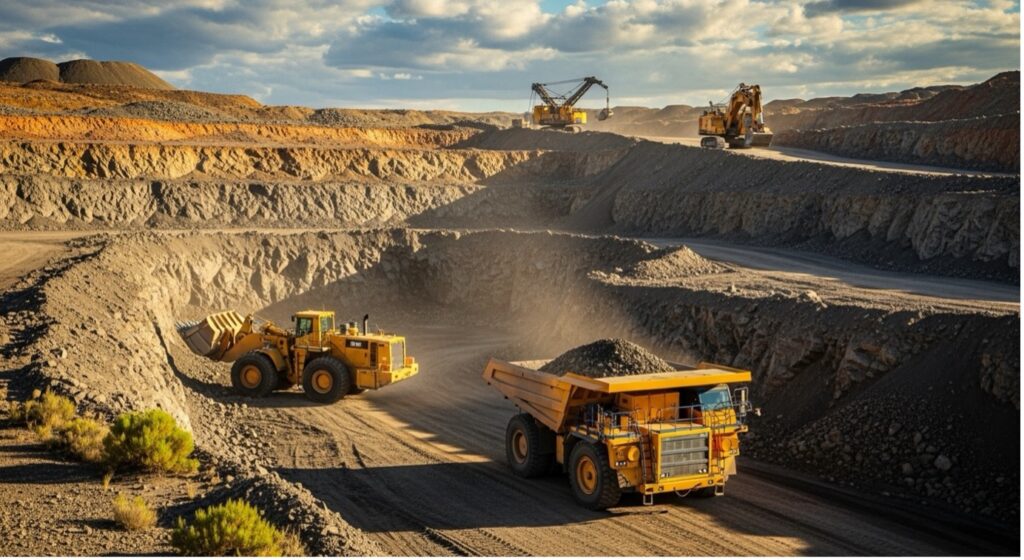
Diesel remains the workhorse of New Zealand’s mining sector. From quarry trucks in Waikato to underground equipment on the West Coast, diesel engines are relied upon for their toughness and high energy density.
Advantages:
- High power output, ideal for heavy-duty operations.
- Established fuel supply and maintenance expertise across New Zealand.
- Long service life under demanding conditions.
Challenges:
- High CO₂ and particulate emissions.
- Rising fuel costs and the effect of New Zealand’s Emissions Trading Scheme (ETS).
- Underground mines face higher ventilation costs due to exhaust.
Consider this. A mid-sized limestone operation in Northland runs a fleet of diesel-powered loaders. DEUTZ diesel engines provide durability and performance, but reliance on diesel alone increases exposure to fuel price volatility and ETS charges. Gradual integration of lower-carbon alternatives could help manage future costs.
Natural gas engines in mining engine technology
Natural gas engines are increasingly seen as a lower-emission alternative, especially for on-site generation or equipment near existing supply networks. Studies show they can cut CO₂ emissions by 20–25% compared to diesel, while also reducing nitrogen oxides and particulates.
Advantages:
- Lower CO₂ emissions than diesel.
- Reduced particulate matter improves underground air quality.
- Can run on liquefied (LNG) or compressed (CNG) natural gas, both available in New Zealand’s energy market.
Challenges:
- Lower energy density means larger storage volumes are required.
- Infrastructure for LNG or CNG is still limited outside of key regions such as Taranaki.
- Slightly higher upfront cost than diesel systems.
For example, a quarry in Canterbury could use natural gas engines for on-site electricity. With local gas supply, the operation could reduce emissions and fuel costs—so long as LNG logistics remain reliable.
Hydrogen engines in mining engine technology
Hydrogen is attracting strong attention as New Zealand progresses towards its 2050 net-zero target. While not yet common in mining, hydrogen engines are being trialled globally, and DEUTZ is developing hydrogen-ready technology for heavy-duty applications.
Advantages:
- Zero CO₂ emissions at point of use when powered by green hydrogen. The only by-product is water vapour.
- Potentially high efficiency when paired with renewable energy.
- Strong government and private sector investment in hydrogen development.
Challenges:
- Hydrogen infrastructure in New Zealand is still at an early stage.
- Production of green hydrogen remains costly compared to fossil fuels.
- Safety and handling require new systems and training.
As an example, a large operation in Otago could trial hydrogen-powered haulage. On-site hydrogen production, supported by hydro or wind resources, could provide a pathway to zero-emission mining once supply chains are more mature. DEUTZ’s hydrogen engine development ensures operators can transition smoothly when the time is right.
The Future of Mining Engines in New Zealand
In the short term, diesel will continue to dominate due to its reliability and supply security. Natural gas offers a practical transitional fuel for reducing emissions, particularly in areas with access to infrastructure. Hydrogen represents the long-term shift, offering the prospect of near-zero-emission mining once production and refuelling capabilities expand.
New Zealand mining companies are increasingly exploring hybrid approaches—maintaining diesel where necessary, introducing natural gas where possible, and positioning for hydrogen adoption. DEUTZ’s portfolio ensures operators can adapt, whether it’s proven diesel performance today, transitional natural gas solutions, or future hydrogen compatibility.