


New Zealand summers might not have the reputation of the Australian outback, but anyone working machinery through a dry January knows they can be tough on equipment. Hot northwesterlies, baked paddocks, dusty quarry floors and forestry tracks, and long days in the field or on site all add up to serious pressure on the engines running farming, forestry, quarrying, construction and general industrial equipment including your diesel engine for hot climate conditions.
That’s why choosing a diesel engine for hot climate conditions takes more than a look at the power figures. The engine has to suit the job, but the cooling, filtration and installation around it need to be up to the conditions too.
Here’s what tends to make the biggest difference.
A Cooling System That Can Handle The Heat
Diesel engines generate plenty of heat under load, and when it’s already pushing into the 30s outside, as it regularly does in places like Canterbury, Central Otago, Hawke’s Bay and the Waikato, the cooling system must work even harder just to keep things where they should be.
That means having a radiator and cooling package properly sized for the engine, the application and the expected ambient temperature. Good airflow through the machine is just as important. If hot air becomes trapped or recirculates through the radiator, engine temperatures can climb quickly, which is the last thing you want mid-shift.
Dust and debris add another layer of difficulty. A radiator might be perfectly suited to the job when it’s clean, but its cooling performance can drop fast as dirt, grass seed, chaff and other material start blocking the airflow.
This is why the complete engine installation matters as much as the engine itself. A diesel engine for hot climate applications is only as reliable as everything built around it, and even the best engine will struggle if the equipment around it stops the cooling system from doing its job.
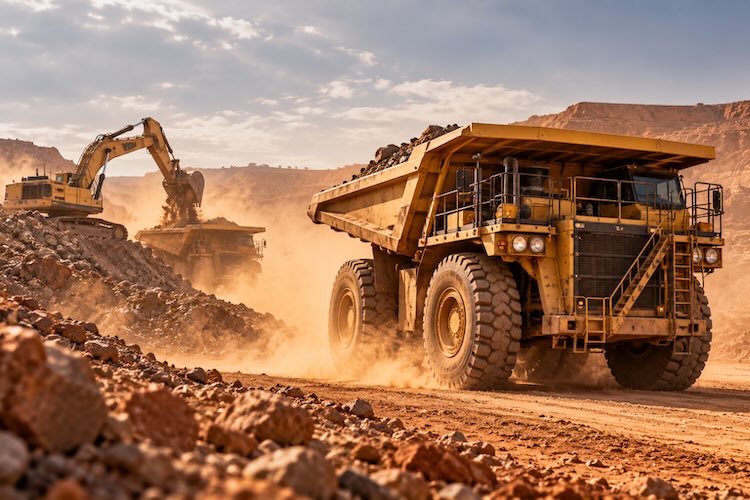
Keeping Dust Where It Belongs: Outside The Diesel Engine for Hot Climate Conditions
Dust might look harmless enough from a distance, but it can cause serious damage once it finds its way inside an engine.
Start with the right air filtration
A well-designed air filtration system stops abrasive particles from ever reaching the cylinders, pistons and other internal components.
The air cleaner needs to be sized correctly for both the engine and the amount of dust it’s likely to encounter, and its location matters too. Drawing air from a cleaner part of the machine can reduce how much dust reaches the filter in the first place, while a pre-cleaner helps strip out larger particles before they get anywhere near the main filter.
Filters should be checked regularly, but that doesn’t necessarily mean opening or replacing them at every opportunity. Unnecessary handling can introduce just as much dirt into the intake system.
Filter restriction indicators and the manufacturer’s maintenance instructions are the best guide for knowing when attention is actually needed.
Don’t forget the radiator
Dust doesn’t stop at the air intake. It settles on radiators and charge air coolers too, restricting airflow and making it harder for the engine to shed heat.
Regular inspection and cleaning is one of the easiest, cheapest ways to support heavy duty engine reliability, particularly through the dry summer months and during harvest.
Choosing a Diesel Engine for Hot Climate Conditions That Fits the Work
Reliability starts with getting the specification right. The engine needs to suit the machine it’s going into, the load it’ll carry and the way it’s actually used day to day.
Push an engine near its limit for most of its working life and it will run hotter and wear out sooner. Go too far the other way, though, and you can end up with an oversized engine that spends most of its time under light load, which brings problems of its own. More power isn’t automatically better.
Think about a contractor running a crusher and loaders at a quarry on the Canterbury Plains, with a dry nor’wester blowing dust across the site. Or a harvesting contractor working long days through a hot Hawke’s Bay summer, or a forestry crew a long way from the nearest workshop. In each case, the engine has to deliver steady, dependable output day after day, and getting the specification right up front is far cheaper than dealing with downtime later.
So the real task is matching power, torque and duty cycle to the work. The 6-cylinder DEUTZ TCD 7.8 shows how that can look in practice, delivering up to 260 kW and 1,400 Nm of torque, and it’s also available as a compact Power Pack for mobile machinery, bringing the engine and key supporting components together in a ready-to-install package.
For anyone selecting a diesel engine for hot climate work in New Zealand, across quarrying, forestry, agriculture or construction, it pays to think beyond the engine alone. Heavy loads, high temperatures, dust, vibration and long hours are all part of the picture, and help is often a long way away when something goes wrong.
Maintenance Needs to Match the Conditions Too
Standard service intervals are a good starting point, but equipment working in harsh conditions usually needs more frequent attention than the book suggests.
Keeping an eye on coolant condition, air filter restriction, radiator cleanliness, hoses, belts and clamps helps catch small issues before they turn into big, expensive ones. It’s also worth watching for any unexplained changes in engine temperature, fuel consumption or performance, as they’re usually trying to tell you something.
During particularly hot spells, it’s a good idea to keep an eye on MetService’s forecasts and plan inspections, maintenance and workloads accordingly.
Using the correct oil, coolant and quality filters matters just as much. Extreme conditions are not the place to cut corners on the products working hardest to protect the engine.
Reliability of a Diesel Engine for Hot Climate Conditions Comes from the Complete Package
There’s no single feature that makes a diesel engine for hot climate conditions reliable in extreme heat and dust. Reliability comes from a combination of things: choosing the right engine, designing the installation properly, and giving the equipment the maintenance it actually needs.
DEUTZ New Zealand works closely with OEMs, dealers and operators to help match engines and power solutions to demanding local applications. Because when the heat is up, the dust is flying and there’s a job to finish, the last thing anyone needs is an engine that can’t keep up.
If you’re specifying or maintaining equipment for hot, dusty conditions, the DEUTZ New Zealand team can help you work through the right setup for your application.