


Understanding Industrial Engine Duty Cycles in New Zealand
When selecting an industrial engine, power output is only one part of the equation. The duty cycle determines how long an engine can safely operate at a given load without risking performance or longevity.
Choosing the wrong rating can result in overheating, excessive wear, and premature engine failure. For equipment operators and manufacturers across New Zealand, understanding the differences between a continuous duty diesel engine, prime power diesel engine, and intermittent duty applications is essential.
What Is a Continuous Duty Diesel Engine?
A continuous duty diesel engine is designed to operate at a constant load for extended or unlimited hours. These engines are commonly used in:
- Irrigation systems
- Quarrying and mining operations
- Off-grid and standby power generation
- Food processing and manufacturing facilities
Because they run for long, uninterrupted periods, continuous duty diesel engines are engineered with advanced cooling systems, durable internal components, and conservative power ratings. This ensures reliable operation even in demanding environments such as remote South Island locations or intensive agricultural regions like Canterbury.
When to choose a continuous duty diesel engine
A continuous duty diesel engine is the preferred choice when equipment must operate for long durations without shutdown. This is especially important in New Zealand industries where uptime directly impacts productivity.
For example, a hypothetical dairy farm in Waikato running milking equipment and water pumps for most of the day would require a continuous duty diesel engine. Using an intermittent-rated engine in this situation would likely lead to overheating and increased maintenance.
What Is Prime Power?
Prime power diesel engines are built for applications where load demand fluctuates throughout the day. Unlike continuous duty engines, they are not intended to run at a constant full load indefinitely.
Typical New Zealand applications include:
- Construction and civil works equipment
- Agricultural machinery
- Mobile and temporary generators
Prime power engines are designed to handle load variation while maintaining durability and consistent performance.
Intermittent Duty Applications
Intermittent duty engines are suited to applications where high power is required only for short bursts rather than continuous use.
Common examples include:
- Hydraulic presses
- Emergency response pumps
- Material handling equipment
Although these engines can deliver high peak output, they are not designed for sustained operation at those levels.
Why Duty Cycle Selection Matters
Selecting the correct duty cycle is critical for ensuring reliable operation and controlling long-term costs. Running an engine outside of its intended rating can lead to:
- Increased fuel consumption
- Engine overheating
- Reduced service life
- Higher maintenance costs
The Energy Efficiency and Conservation Authority (EECA) highlights the importance of improving energy efficiency and optimising fuel use to enhance reliability across New Zealand’s industrial sectors.
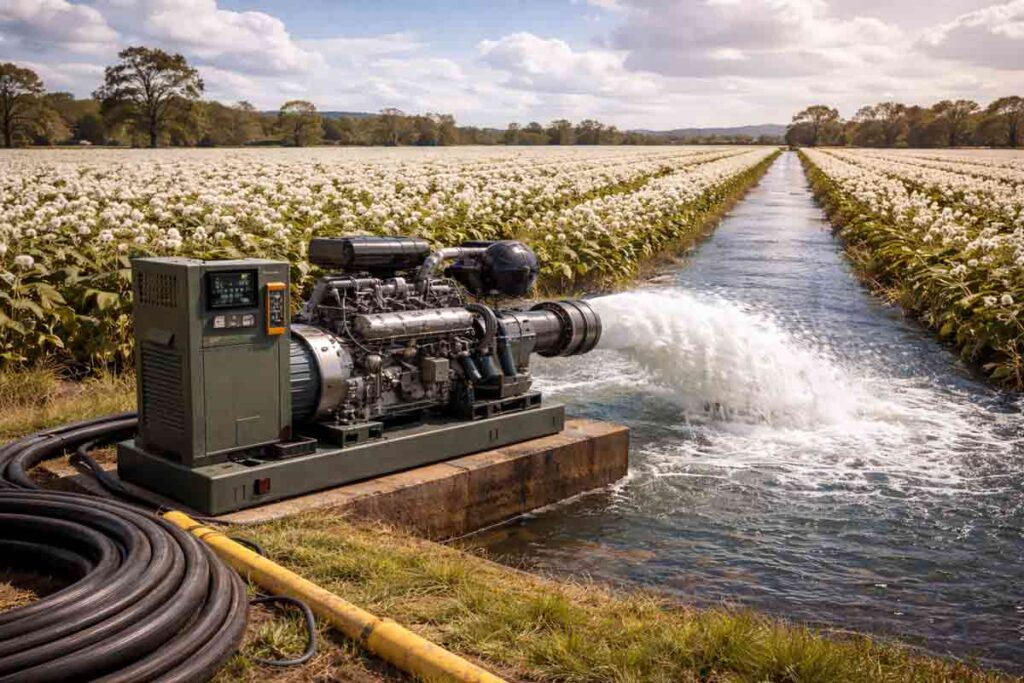
Application example: Continuous duty diesel engine in irrigation
Consider a large-scale irrigation system on a Canterbury cropping farm.
During peak growing periods, pumps may need to operate up to 18 to 20 hours per day, effectively requiring a continuous duty cycle.
If an intermittent-rated engine were used, it would likely overheat and experience accelerated wear.
By selecting a continuous duty diesel engine such as the DEUTZ 2011 series, widely used by pump equipment manufacturers, operators can ensure reliable, long-term performance.
Duty Cycle and Engine Longevity
Correct duty cycle selection has a direct impact on engine lifespan.
An appropriately rated engine operates within its optimal performance range, reducing internal stress, improving fuel efficiency, and extending service intervals.
It is also important to recognise that cooling systems, lubrication capacity, and turbocharging are all designed around specific duty ratings.
Selecting the Right Engine Rating
When specifying a prime power diesel engine or continuous duty diesel engine, equipment designers should consider:
- Average load requirements
- Maximum operating hours
- Environmental conditions across New Zealand
- Cooling system capacity
Consulting with an experienced industrial engine supplier helps ensure the correct engine rating is selected for the application.
The Bottom Line
Understanding industrial engine duty cycles is essential for reliable and efficient equipment operation.
Choosing between a continuous duty diesel engine, prime power diesel engine, or intermittent rating ensures the engine performs safely within its design limits.
For more information on DEUTZ industrial engines and duty ratings, visit:
https://www.deutz.com/en/products/